
How Much Does Playground Equipment Cost in 2026?

Updated: Feb 10
A Realistic UK Pricing Guide for Schools, Councils, Community & Commercial Spaces

If you’re planning a playground project in 2026 — whether for a school, council, community space or commercial site. One of the first questions you’ll ask is:
“How much does playground equipment actually cost?”
The honest answer is that playgrounds don’t have a single price, but they do fall into clear, realistic budget ranges. In this guide, we’ve set out real UK costs, what genuinely affects price, and what’s achievable at different budget levels, based on the projects we deliver every year across education, public and commercial settings.
This is written for people who want clarity — not sales talk.
Typical Playground Equipment Cost in the UK (2026)
In 2026, most playground projects in the UK fall within the following ranges:
Under £10,000 – Small upgrades or replacements
£10,000 – £25,000 – Small play areas (schools, nurseries, pubs and cafés)
£25,000 – £60,000 – Most primary schools and small commercial sites
£60,000 – £150,000+ – Large school, MUGA's, community or commercial schemes
These figures usually include equipment, installation and any required safety surfacing, although every site is different.
Can You Do Anything for Under £10,000?
Yes — and this is an important point, particularly for schools and smaller organisations.
Budgets under £10,000 are best suited to targeted improvements, such as:
Replacing an old or failed single item
Installing a small climbing unit or trim trail directly onto grass
Adding a new swing set or balancing equipment
Refreshing a tired corner of an existing playground
Making phased improvements while funding continues
For commercial sites - helping improve dwell time, spend per head or return rate
Projects at this level won’t transform an entire site, but they can significantly improve play value when done thoughtfully.
The key is:
Simple equipment
Minimal groundworks
Making use of existing grass where compliant
Designing with future phases in mind
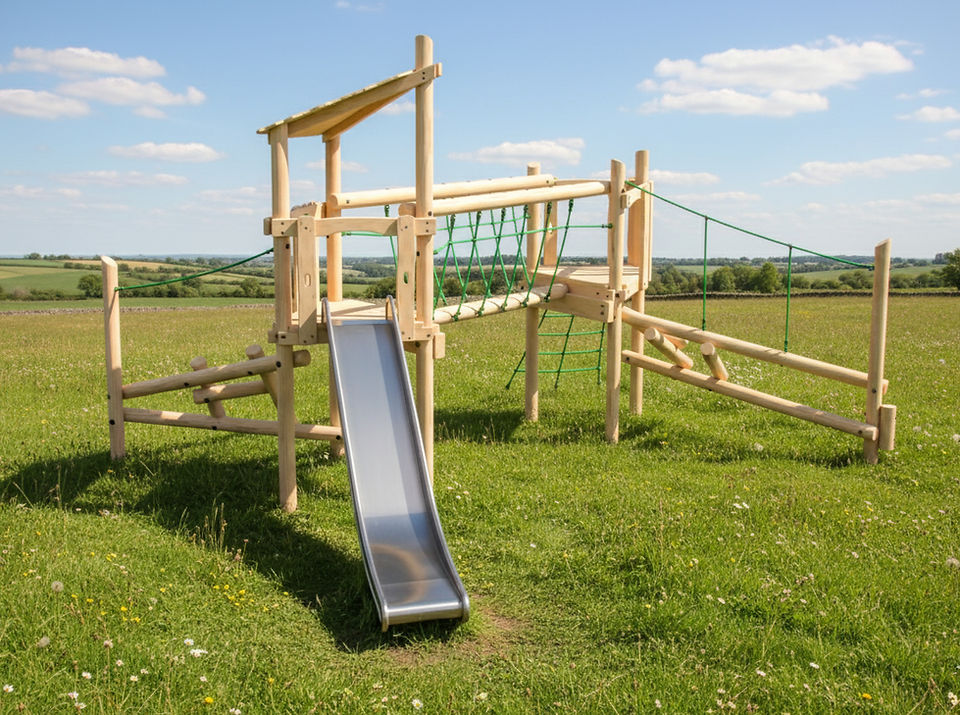
Explorer Double Deck Unit 1 under £10k 
Linked Trail 8 installed onto grass 
4m Hexagonal Shelter under £10k
Small Playground Projects (£10,000 – £25,000)
This budget range works well for:
EYFS areas
Smaller schools and nurseries
Early-stage fundraising projects
Defined play zones rather than whole playgrounds
Typical inclusions may be:
One or two core pieces of equipment
Limited wetpour or grass mat surfacing
A clear focus on a specific age group
Good design matters more than quantity at this level. A well-planned £20k playground will almost always outperform a poorly thought-out £40k one.

Linked Trail & Artificial Grass £15k 
Surfacing Upgrade 
EYFS Tower Unit & Artificial Grass 
Clamber Tower & Bonded Rubber Mulch
Medium Playground Projects (£25,000 – £60,000)
This is the most common budget range for UK primary schools and many small commercial sites.
Projects in this bracket often include:
Multiple play elements
Zoned areas (climbing, imaginative, social)
Wetpour surfacing in key fall zones
Inclusive access routes
At this level, playgrounds start to feel cohesive and intentional, rather than pieced together over time.

EYFS Development less than £40k 
Visitors Centre Play Area 
KS1 Imaginative Play Area £40k 
Outdoor Gym Equipment & Bonded Rubber Mulch
Large or Transformational Playgrounds (£60,000 – £150,000+)
Larger budgets allow for a whole-site approach, rather than replacing individual items.
These projects may include:
Full playground redesign
SEN and inclusive play zoning
Extensive surfacing and groundworks
Mounds, tunnels and landscape features
Shelters, seating and outdoor learning areas
These schemes are designed with longevity, inclusivity and flow in mind and are common across schools, councils and commercial leisure sites.

4G MUGA & Running Track £100k+ 
£150K+ KS2 & KS1 Complete Playground Development 
£100k+ Full Playground Redevelopment 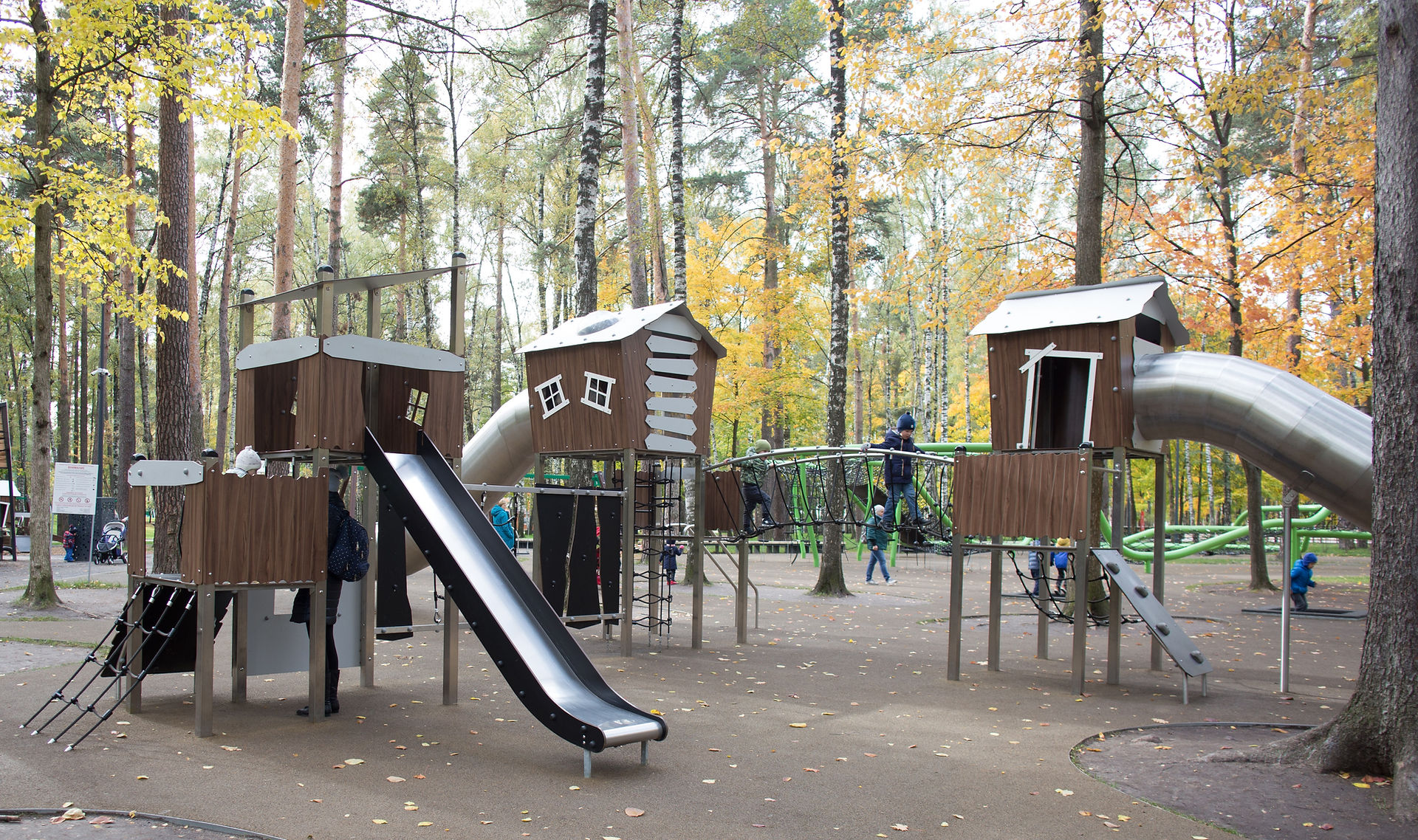
£75K+ Destination Playground 
£80K+ Brand New Community Play Area 
£65k+ SEN Playground Improvements
What About Commercial & Leisure Playgrounds?
Many of the same cost principles apply whether a playground is installed at a school or a commercial site, such as a:
Holiday park
Visitor attraction
Farm park
Pub or restaurant
Public-facing leisure venue
The main differences for commercial play areas are usually:
Higher daily footfall
Wider age ranges
Greater durability requirements
Larger surfacing areas
As a result, commercial playgrounds often sit toward the upper end of each budget bracket, but they are also designed to last longer and cope with heavier use.
If you’re planning a commercial or leisure playground and would like a more detailed breakdown, see our dedicated guide: Commercial Playground & Leisure Play Area Costs (UK)
Visitors Centre Playground Commercial Playground Robinia Holiday Park Playground Clamber Castle - Play Equipment Commercial Playground - Tower Unit Steel + Commercial Playground Shopping Centre Playground Holiday Site Playground
What Actually Affects Playground Cost?
This is where prices genuinely change — and why quotes can vary.
Equipment choice: Timber, metal, natural play and bespoke elements all vary in cost and lifespan.
Surfacing: Wetpour, grass mat, or retaining existing surfacing can significantly affect budgets.
Ground conditions: Slopes, drainage, made ground and access all matter.
Installation and location: Site access, distance, phasing and working hours can influence cost.
Safety and compliance: All playgrounds must meet BS EN 1176 / 1177, and allowances need to be realistic.
Size of the playground & number of users: One of the biggest cost factors is how many children the playground is designed for, not just how big it looks.
A playground intended for 15–20 users at a time requires very different spacing, fall zones and surfacing compared to one designed for 100+ daily users, which is common in schools and commercial settings.
Why Playground Quotes Can Look So Different
If you’ve received quotes that vary widely, it’s often because:
Groundworks or surfacing are excluded
Installation costs are under-allowed
Designs are product-led rather than site-led
Longevity and maintenance aren’t factored in
Lower prices can sometimes mean higher costs later.
How to Get the Best Playground for Your Budget
A few proven principles:
Phase projects where needed
Prioritise surfacing and core play first
Avoid overly themed, short-life equipment
Design with flexibility and future growth in mind
Prioritise outcomes and objectives over specific aesthetics
Frequently Asked Questions
Can playgrounds be installed in phases? Yes — many schools, councils and commercial operators do this successfully.
Can equipment be installed directly onto grass? Sometimes, depending on fall height and compliance requirements.
How long does playground equipment last? Typically 15–25 years with correct installation and maintenance.
Can you repair or replace single items? Yes — many projects start with targeted replacements.
Planning a playground project?
Playground projects don’t need to be all-or-nothing. Whether you’re replacing a single item or planning a full redesign, understanding realistic costs helps you make better decisions and plan confidently.
If you’d like honest guidance on what’s achievable within your budget, whether you’re replacing a single item, planning a phased approach, or exploring a full redesign, we’re always happy to help.
A quick conversation early on often saves time, money and frustration later.
Or to discuss potential cost contact us at:
Call: 01482 762374


Comments